UNICEF ADVOCATES GH¢30m ANNUAL FUNDING FOR CHILD PROTECTION IN GHANA
It has also called for about GH¢1.4 million annually for the Social Welfare Information Management System (SWIMS) to enable child protection cases to be properly documented, monitored and followed up.
The UNICEF Ghana Social Policy Specialist, Kwesi Asante, who made the call, said the government should take over the financing of ISS, which is currently supported largely through development-partner resources.
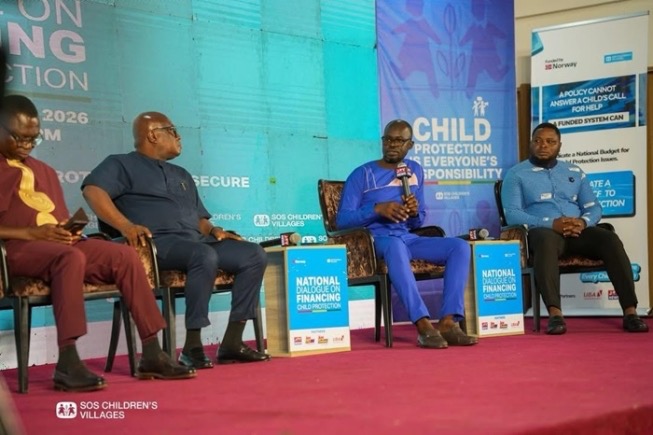
Mr Asante made the call at a National Dialogue on financing child protection held in Accra on the theme: “Beyond Policy: Financing child protection to secure every child’s future.” The dialogue was organised by the SOS Children’s Villages Ghana, World Vision Ghana, Plan International Ghana, International Justice Mission (IJM) and other partners, with support from NORAD.
Mr Asante said the Ministry of Gender, Children and Social Protection was allocated GH¢3.2 billion in 2026, compared with GH¢2.9 billion in 2025.
He said child protection-related interventions across sectors received about GH¢165 million in 2026, up from more than GH¢7 million in 2021, representing only 0.04 per cent of total government expenditure.
He said development-partner funding for child protection had declined from 14.5 per cent in 2022 to 3.4 per cent in 2026, while internally generated funds had fallen from seven per cent to almost zero. Mr Asante said these figures made it necessary for the state to assume greater responsibility for financing core child protection services.
Funding challenges
Opening the proceedings on behalf of the board and management of SOS Children’s Villages Ghana, a board member, Mike Arthur, said the dialogue followed a three-day national advocacy and child protection workshop held in Accra in April. Mr Arthur said Ghana already had legal and policy structures for child protection, anchored by the Children’s Act, 1998 (Act 560), and the Child and Family Welfare Policy. He said underfunding at the Department of Social Welfare, delaid in budget disbursement, uncoordinated private-sector participation and inaccessible referral pathways continued to affect child protection services.
The Administrator of the District Assemblies Common Fund (DACF), Michael Harry Yamson, disclosed that there was no direct child protection allocation in the DACF formula.
At the district level, the District Chief Executive for Adaklu, Jerry Yao Ameko, said current DACF allocations had prescribed spending areas, including the 24-hour economy, education and health infrastructure, water, sanitation, central administration and legacy projects. He said child protection was embedded within the five per cent central administration and recurrent allocation rather than having a separate share.
Social welfare
The Municipal Head of Social Welfare and Community Development at Adenta and National President of the Social Workers Association of Ghana, Divine Arnold Kodjo Exorgbe, said assemblies often lacked vehicles for social welfare operations.
He said the shortage made it difficult for social workers to monitor cases, transport children to hospitals and trace families.
The Plan International representative, Mr Eric Ayaba, said child rights should not become an afterthought and argued that financing child protection should transcend changes in government and political cycles.
World Vision called for increased national and local investment in social welfare institutions, trained social workers, community structures and case management, with financing based on long-term systems rather than short-term projects.
The National Productive Inclusion Specialist at the Ministry of Local Government, Decentralisation and Rural Development, Desmond Duametu, said development planning often prioritised visible “brick and mortar” projects because their results were easier to see, while the rescue and protection of a child was less visible.
He said child protection should be recognised as an investment in human capital, adding that private-sector corporate social responsibility could complement government financing.
The Norwegian Ambassador, Dr. John Mikal Kvistad, said sustainable financing was necessary to translate child protection policies into effective outcomes, particularly in addressing child trafficking, child labour and physical punishment.
— Advertisement —
Ad Slot 728×90
Comments (0)
Loading comments...
Related Stories

'One artiste cannot take Ghanaian music to the global stage’ — Black Sherif
Iqra News Desk2026-09-25
GES orders school heads to stop collecting unauthorised fees, refund parents
Iqra News Desk2026-09-25