PARLIAMENT APPEALS FOR REFUND OF $5.6m OWED PETROLEUM COMMISION
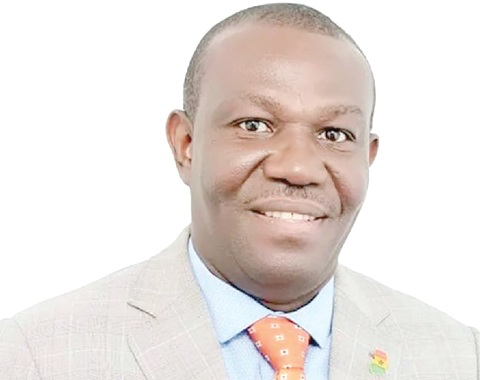
He said the ministry had requested for the release of the funds from its budget as budgetary support for the Domestic Debt Exchange Programme (DDEP) between 2019 and 2020.
Mr Bedzrah said the request was made based on the understanding that the funds would subsequently be refunded to the commission.
“The Petroleum Commission has written to the Minister of Finance for the refund of the $5.6 million, which has still not been paid and so I appealed this afternoon to the ministry to release that money to them,” he said. Mr Bedzrah, who made the appeal when he led members of the Energy Committee to visit the Commission’s head office in Accra yesterday, said the commission’s ability to effectively discharge its regulatory mandate was being hampered by inadequate funding.
That, he said, had resulted in the institution having to rely on internally generated funds to support some of its operations.
The committee’s visit formed part of its oversight responsibilities to assess the operations, challenges and resource requirements of institutions under its jurisdiction. The Energy Committee chairman said the Petroleum Commission, which was responsible for regulating Ghana’s upstream petroleum industry, lacked a dedicated data centre despite the importance of data to the sector. “We have a regulatory institution that needs a data centre and all they rely on is to sell data to prospective institutions that want to explore hydrocarbons in this country.
“But they do not even have a data centre at all and have to rely on Ghana National Petroleum Corporation (GNPC) data centre, which is not the best for this country as a regulatory body.”
Mr Bedzrah said the situation required urgent attention to enable the commission to acquire the necessary infrastructure and resources to perform its regulatory functions effectively. He stressed that adequate funding was essential for the commission to build the technical capacity and infrastructure required to regulate the petroleum sector, attract investment and safeguard the country’s interests.
The commission, he said, was even supposed to regulate GNPC and “you have to go to GNPC for data and I do not think that is the best thing at all”.
“If that $5.6 million had been released to them, by now they would have had a world-class data centre that they would rely on.
“And so I appeal once again to the Finance Ministry to allow them to access that money so that they can finish their data centre,” he said. Warning to GNPC
The chairman expressed dismay at the failure of the GNPC to undertake exploratory drilling in the Voltaian Basin in spite of enjoying budgetary allocations for the project over the years.
He said Parliament had approved the budget for the corporation to undertake such exploration, but it had so far failed to do so.
“This has been the worry of the whole committee because every year we see it on the budget of GNPC that they are going to drill or do exploration at the Voltaian Basin. “We want to see the first drop of oil so that we will know whether it is of commercial quantity or not,” he said.
Reforms
The Chief Executive Officer of the Petroleum Commission, Emeafa Hardcastle, said the government was advancing reforms to Ghana’s upstream petroleum sector in order to attract new investment, encourage exploration and development.
She said the move was to ensure the country secured a fair share of its petroleum resources. To achieve that, she said members of the relevant committee had completed their review of Ghana’s upstream laws and fiscal trends, paving the way for proposed amendments to the Exploration and Production Act, 2016 (Act 919).
“The proposed amendments are currently before Cabinet and expected to be transmitted to Parliament for consideration,” she said.
Reduction of carried interest
Mrs Hardcastle said the reform agenda was recently signalled by the government at the African Oil Week, where key proposals aimed at making Ghana’s petroleum sector more attractive to investors, were outlined.
“Among the proposed changes is a reduction in the Ghana National Petroleum Corporation’s carried interest from 15 per cent to 10 per cent. “The reforms also propose extending petroleum agreement tenures to as 30 years, revising the signature bonus structure and extending the period for which companies can carry forward losses,” she said.
Mrs Hardcastle told members of the committee that the government’s move to reform Ghana’s upstream petroleum sector was intended to reward companies willing to take calculated exploration risks while maintaining an equitable share of petroleum revenues for the state.
She, therefore, expressed optimism that the committee’s scrutiny of the proposed legislation would help in refining the reforms when the amendment bill was formally laid before Parliament.
— Advertisement —
Ad Slot 728×90
Comments (0)
Loading comments...
Related Stories
POLICE HUNT FOR SUSPECTS AFTER SHOOTING AT MINING SITE AT BEHENASE
Iqra News Desk 22026-09-25
BAGBIN RECALLS PARLIAMENT FOR SEPTEMBER 29 SITTING FOLLOWING CALLS TO PROBE NARCOTICS SEIZURES
Iqra News Desk 22026-09-24
GHANA LOSES $1.9BN IN RESERVES IN TWO MONTHS
Iqra News Desk 22026-09-24