STOP REWARDING PEOPLE WITH BITTER TONGUES’ - SPEAKER BAGBIN TO POLITICAL LEADERS
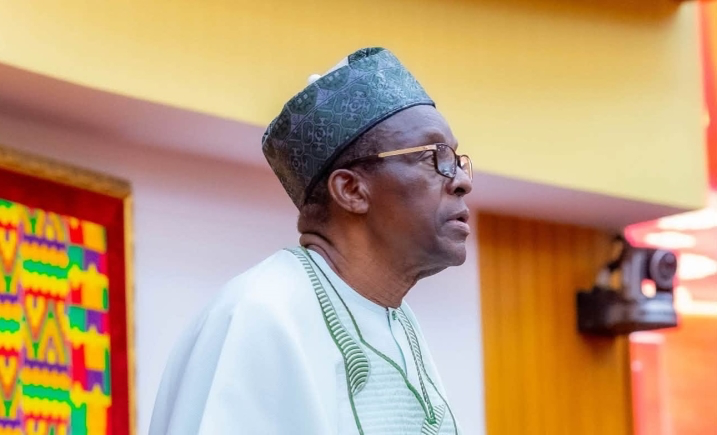
The Speaker of Parliament, Alban Sumana Kingsford Bagbin, has urged leaders of political parties to stop the practice of rewarding politicians who use abusive and inflammatory language in political discourse as such acts threatens Ghana’s democratic culture.
He said recognising political affiliates with bitter tongues encouraged others to also follow similar bad conduct.
In his view, political parties and their leaders had a responsibility to promote a political culture in which robust disagreement and criticism could take place without insults, personal attacks or language calculated to demean opponents.
“Do not reward only bitter tongues; that is what I have observed up to date and that encourages others to copy that because that is how they will be recognised,” he said.
No more
Addressing Parliament on increasingly intemperate nature of public discourse in Ghana in recent times during an emergency sitting of the House Tuesday (Sept 29), Mr Bagbin reminded all political actors to moderate their language and be mindful that political competition should not become a contest in abusive rhetoric.
“We are not going to entertain that anymore since Ghana’s democracy had been hard-won and we should never assume that democratic stability perpetuates itself.
“Democracy is sustained not only by Constitution, elections, courts and Parliament; it is also sustained by discipline and decency and a political culture in which citizens can disagree profoundly without ceasing to recognise if others’ humanity and equal citizenship,” he said.
The sitting followed a petition by the Minority Caucus for the Speaker to recall the House to consider and set up a bipartisan committee to probe recent cocaine seizures involving consignments linked to Ghana.
Stop the abuse
The Speaker said while social media and other digital platforms had expanded the democratic space by giving citizens unprecedented opportunities to participate in national conversations, criticise public officials and demand accountability, the freedom of expression should not be used to degrade public discourse.
He said political disagreement, dissent, satire and vigorous debate were essential features of a democratic society but cautioned that disagreement was increasingly being expressed through insults rather than reasoned argument.
“Political opponents are too readily treated as enemies; personal abuse is substituted for engagement with ideas and allegations are repeated without regard to their truth or consequences.
“Threats, ethnic insinuations and inventive language deliberately calculated to humiliate others are amplified through digital platforms with extraordinary speed and reach,” he said.
Lead by example
Mr Bagbin said the situation should concern all Ghanaians irrespective of their political affiliation and that the country’s democratic gains should not be taken for granted.
“Robust disagreement is legitimate; strong criticism is legitimate and holding government, the opposition, the Speaker, leadership and every institution or state to account is legitimate but insult is not argument and abuse is not scrutiny,” he said.
Mr Bagbin said political leaders had a particular responsibility to demonstrate that firmness of conviction did not have to be accompanied by disrespect.
Warning that the cumulative effect of inflammatory language could deepen divisions and create tensions that could become increasingly difficult to reverse, Mr Bagbin advised political actors lead by example.
“Our democracy is too valuable to be endangered by a political culture in which insults replace arguments, abuse replaces persuasion and opponents are treated as enemies,” he said.
Mr Bagbin cited an incident involving the Member of Parliament for Walewale, Dr Abdul Kabiru Tia Mahama, who had criticised the circumstances surrounding the recall of Parliament in August this year as “rude”.
The Speaker said the MP was entitled to criticise the decision to recall Parliament and to question the manner in which the emergency proceedings had been managed.
His concern, however, was with the language used by the MP during a media engagement, where he described the Speaker as having “rudely” recalled MPs from their constituencies.
‘Withdraw and apologise’
In the view of Mr Bagbin, members of the House were entitled to criticise decisions, question reasoning and challenge parliamentary procedures but such criticism should not diminish the dignity of the institutions through which Ghana’s democracy functioned.
He subsequently asked Dr Tia Mahama to withdraw the expression and apologise to the Houser.
The MP complied, saying that, on hindsight, the word should not have been used and that he withdrew it unreservedly.
The Speaker said the incident demonstrated the broader principle that MPs remained representatives of the institution even when speaking outside the Chamber, particularly on matters concerning the proceedings and authority of Parliament.
He reiterated that the objective was not to prevent criticism but to ensure that political debate remained respectful and constructive.
“Members may criticise decisions or question reasonings. Members may challenge the procedure where you believe it is wrong. But members must do without diminishing the dignity of the institutions through which our democracy functions,” he said.
— Advertisement —
Ad Slot 728×90
Comments (0)
Loading comments...
Related Stories

Nigeria set to launch National Digital Address System 9 years after Ghana showed the way
Iqra News International2026-09-30

NAS CEO Inspects Progress of “Operation Restore Fleet”
Isshaq Baron2026-09-29