
SPAIN SIEZES 2,600 KILOS OF COCAINE AT PORT OF VALENCIA HIDDEN IN GHANA COCONUT SHIPMENT
The authorities in Spain have seized 2,600 kilos of cocaine hidden inside wooden boxes of coconuts shipped from Ghana to the Port of Valencia, according to a press release issued on November 11, 2026 by Spain’s Tax Agency and the Civil Guard.
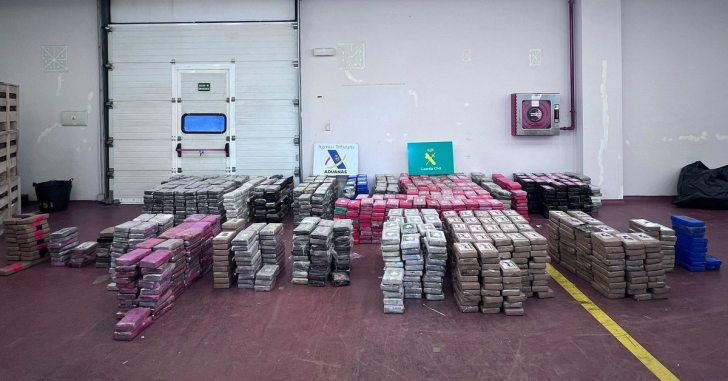
The drugs were found concealed amongst the goods in the two containers, hidden in false bottoms in wooden boxes used to transport coconuts, the declared cargo.
The two containers departed Tema on August 2, 2026 and arrived in Spain on August 22, 2026.
Customs officers flagged the shipment as high-risk and discovered layers of cocaine packages concealed beneath false bottoms in the coconut crates.
The statement said after intercepting the drugs, investigators tracked the remaining cargo as it was transferred into two refrigerated trucks and driven to a warehouse in the La Juaida industrial estate near Almería.
Police monitored the unloading operation before arresting two men in Viator: the importer and the person responsible for receiving the shipment were arrested.
The statement explained that it was a joint operation by the Tax Agency and the Civil Guard that seized the 2,600 kilos of cocaine at the port of Valencia
The drugs were found concealed amongst the goods in two containers from Ghana, hidden in false bottoms in the boxes
The joint operation has resulted in the arrest of two people in the province of Almería in connection with the import and unloading of the goods
The operation ended with the arrest of two people in Viator, in the province of Almeria, in connection with the import and unloading of the goods. They were identified as the importer of the cargo and the person in charge of unloading it.
According to the Spanish authorities, the containers were loaded on 2 August 2026 at the port of Tema, Ghana, and arrived at the port of Valencia on 22 August aboard a container ship.
They were selected for inspection by the Entry Summary Unit of the Customs Surveillance Service, which considered that they presented a high risk profile during routine controls on international trade.
During the inspection, investigators detected double bottoms in the wooden boxes carrying the coconuts. The cocaine was not hidden inside the coconuts themselves, but under a false structure built into the boxes used to transport them.
The containers were then followed under surveillance. They were transferred from the Valencia docks to two refrigerated trucks, which travelled by road to an industrial warehouse in the La Juaida estate in Viator, Almeria.
Tactical surveillance of the warehouse led to the arrest of the two men.
The operation involved the Valencia and Almeria Operational Units of Customs Surveillance, as well as the Organised Crime unit and the Fiscal and Border Analysis and Investigation Unit of the Civil Guard in Valencia.
The seizure is the latest in a series of large cocaine consignments intercepted in Europe after passing through Ghana.
11 November 2026. – Customs officials from the Tax Agency and the Civil Guard have seized 2,600 kilograms of cocaine that was concealed amongst goods being transported in two shipping containers from Ghana, bound for the port of Valencia.
The operation concluded with the arrest of two people in the municipality of Viator (Almería): the importer of the goods and the person responsible for unloading them.
Detection of the containers and location of the drugs
As part of its efforts to monitor international trade, the ENS (Entry Summary) Unit of the Sub-Directorate-General for Customs Surveillance Operations selected two shipping containers for inspection, having assessed them as presenting a high risk profile.
The containers had been loaded on 2 August at the port of Tema (Ghana) and arrived at the port of Valencia on 22 August on board a container ship.
Whilst inspecting the goods, investigators discovered false bottoms in the wooden crates in which the declared cargo (coconuts) was being transported. Beneath these false bottoms, the investigators found, in each box, a whole layer of packages of the type commonly used to transport cocaine. On opening these parcels, they discovered a white powdery substance whose characteristics were consistent with cocaine hydrochloride. Screening tests carried out using a ‘narcotest’ confirmed that the substance was cocaine.
Tracking of goods and seizures
Once the drugs had been seized and the relevant customs formalities completed, an operation was launched to track the containers as they left the port of Valencia and on to their final destination.
During the operation, all the goods were transferred to two refrigerated lorries, which continued their journey to a warehouse in the La Juaida industrial estate in Almería.
Once there, the officers carried out surveillance of the unloading of the goods, which led to the arrest of the two individuals allegedly involved in the import and unloading of the lorries.
The operation involved the Valencia and Almería Operational Units of the Customs Surveillance Service, as well as the Organised Crime Units and the UDAIFF of the Civil Guard Command in Valencia.
Credit: graphic.com.gh
— Advertisement —
Comments (0)
Loading comments...