National Conference of Imams: Dr. Amin Adam proposes 7-pillar charter for efficient mosque governance and community progress
Former Finance Minister Dr. Mohammed Amin Adam has challenged Imams and Muslim leaders to adopt a unified governance charter to ensure effective, transparent and resilient leadership of mosques across Ghana.

Former Finance Minister Dr. Mohammed Amin Adam has challenged Imams and Muslim leaders to adopt a unified governance charter to ensure effective, transparent and resilient leadership of mosques across Ghana.
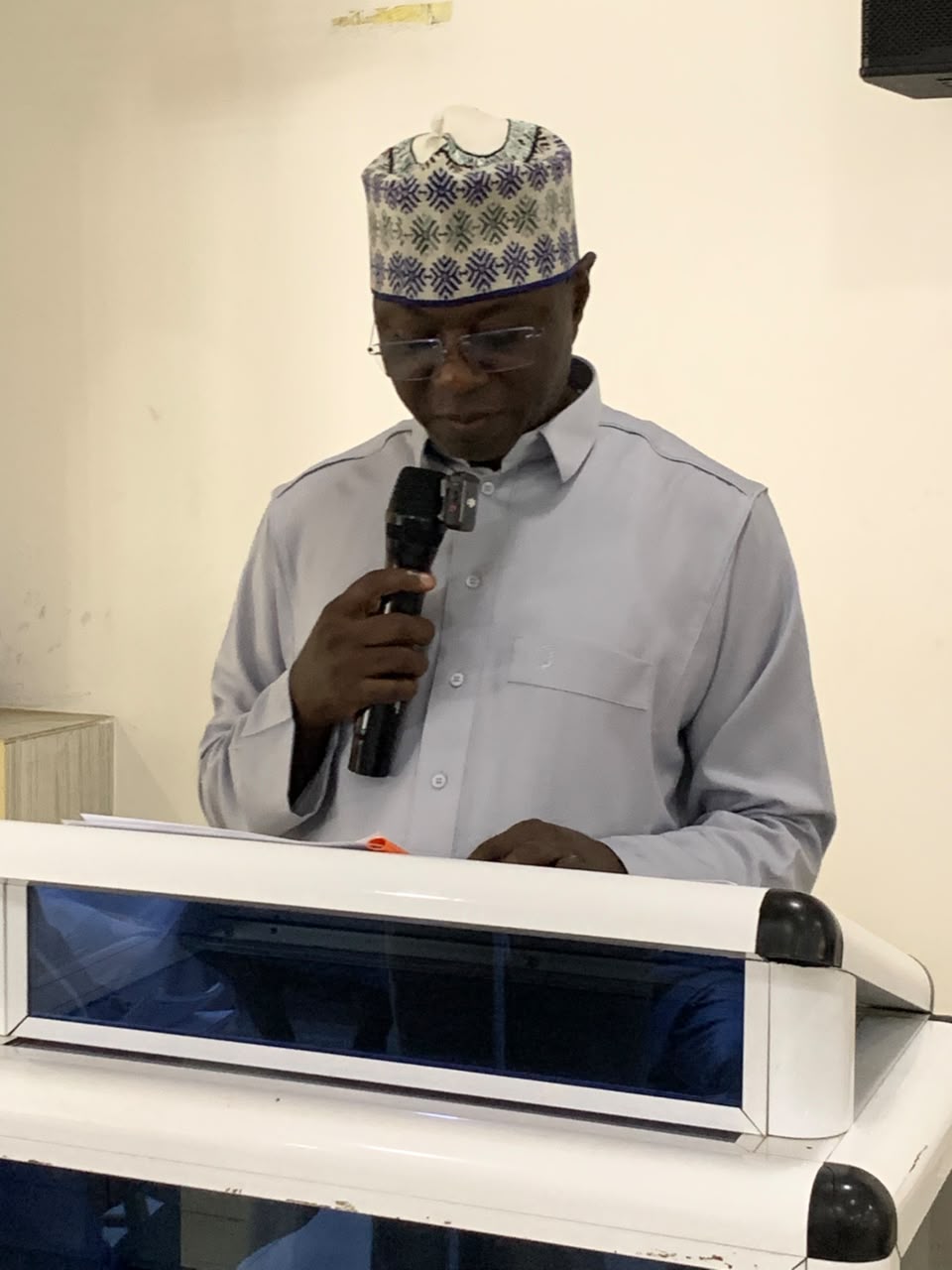
Speaking at the 5th National Conference of Imams and Muslim Clerics in Accra, held under the theme: Empowering Imams for Timeless Leadership Skills for a Resilient Muslim Community in Ghana, Dr. Amin Adam said the theme requires moving from ad hoc administration to a clear, agreed framework that guides how Imams are selected, how mosques are managed, and how they serve their communities.
To achieve that, he proposed seven pillars which he described as the foundation for timeless Islamic leadership.
The framework, he noted, is necessary because many of the challenges facing the Muslim Ummah today - from painful succession disputes after the death of an Imam, to mistrust over funds, to youth unemployment - stem from the absence of documented governance systems.
Dr. Amin Adam, who was representing former Vice President Dr. Mahamudu Bawumia, warned that without reform, leadership of mosques could fall into the wrong hands.
"The Prophet Muhammad warned us of the consequences of placing authority in the wrong hands. And if we don't have a clear legitimate selection and succession process, Imamship may land in wrong hands," he told the gathering.
He therefore urged the conference to decide before it closed on adopting a common charter for all central and significant mosques.
Clear and Legitimate Selection and Succession
He called for every central and major mosque to have a written constitution agreed through consultation and witnessed by the community, with clear, published criteria for Imamship including knowledge of the Quran and Sunnah, sound character, community acceptance and basic leadership competence.
The selection process, he said, should involve Ulama councils, elders, traditional authorities where custom requires, and representatives of the congregation, with a defined route for resolving disagreements.
He also called for the appointment of Deputy Imams and a clear succession plan.
Mosque Management Committee
Dr. Amin Adam said many mosques lack management committees and proposed that every significant mosque should have a functioning committee to handle maintenance, funds, welfare, and to represent the Imam, stressing that the role must remain voluntary.
"This management committee role is not a paid job. When people expect to receive a salary every month, then that is problematic. There will be nothing left to be used for the maintenance of the mosque," he said.
Financial Stewardship and Transparency
Citing Quran 2:282 - "O ye who believe when you contract a debt for a specified term write it down" - he argued that if Allah commands documentation for private debt, it is even more required for mosque funds.
He commended mosques that write contributions on slates and render accounts every Friday and urged that all funds be kept in institutional accounts with at least two signatories, never in personal accounts.
He also called for Zakat to be collected and distributed through credible, accountable structures.
"Without transparency we will give room to rumour and suspicion and mistrust that will not augur well for our peaceful coexistence as Ummah," he warned.
Knowledge, Competence and Continuing Education
The modern Imam, he said, needs both traditional sciences - Quran, Hadith, Fiqh, Arabic - and practical competences in leadership, administration and basic financial management.
He welcomed indications that the conference would provide leadership skills training for Imams.
Mosques as Centres of Welfare and Enterprise
Linking governance to community resilience, he urged mosques to become centres for youth skills training, mentorship and entrepreneurship support linked to TVET institutions and employers.
"We should not expect government to give employment to all of us. We should not even expect the private sector to give employment to all of us. We as Muslim Ummah have to do it by ourselves," he said.
To illustrate self-reliance, he proposed a One Cedi monthly contribution: If Muslims constitute 20 percent of Ghana's population - about five million people - and each contributes GH¢1 a month, the community would raise GH¢5 million monthly and over GH¢50 million in 10 months, "more than what any government can give us."
Unity, Peace and Public Engagement
He said disunity remains a major challenge, with divisions not only between sects but even within the same sect, and described the presence of all sects at the conference as proof that Muslims can co-exist.
"If anybody outside tells me that the Muslims cannot sit together irrespective of their sect, I'll tell the person that he is a liar. He should come to this room," he said.
Communication in the Digital Age
The final pillar addressed AI and digitalization. Noting that he was representing Dr. Bawumia, whom he described as the champion of digitalization, he said AI can help build communities but can also mislead.
He cited Quran 49:6 - "O you who believe if a wrongdoer brings you news, verify it" - as the ethical principle for the digital age and urged Imams to lead the campaign against spreading unverified information.
— Advertisement —
Ad Slot 728×90
Comments (0)
Loading comments...
Related Stories

INFLATION RISES to TO.2% IN SEPTEMBER 2026 AS PRICES IN SERVICES SECTOR STILL HIGH
Iqra News Desk2026-10-07

GOLDBOD REPORTS $1.8B IN FOREIGN EXCHANGE IN SEPTEMBER 2026
Iqra News Desk 22026-10-01