
AFRICAN LEADERS PUSH FOR HIGHER EDUCATION TRANSFORMATION IN ACCRA
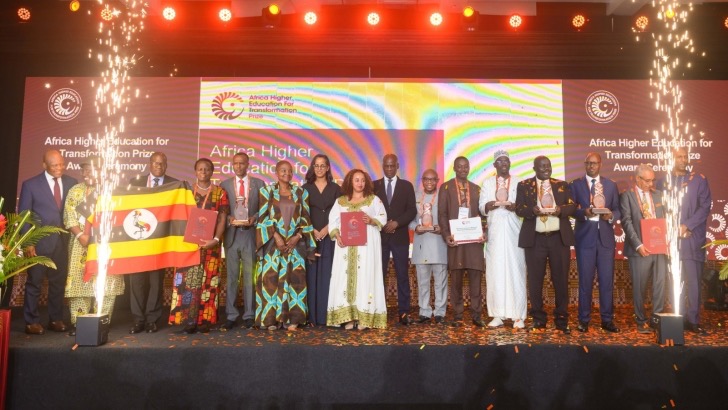
The event also marked the first Africa Higher Education for Transformation Prize award ceremony, recognising institutions advancing sustained, institution-wide transformation.
Under the theme "Reimagining Higher Education for Africa's Human Capital Development," delegates explored what a relevant, high-quality, impactful and sustainable higher education system should deliver for Africa's young people.
"Transformation is not just a better university. It is a university that makes the whole economy around it work better for young people," said the President and Chief Executive Officer of the Mastercard Foundation, Ms Sewit Ahderom. "Four things make that real. Curricula built with employers, so that what is taught is what the country needs, and learning leads somewhere. Credentials that say what a graduate can do, not how long they sat, and that travel with them across borders. Institutions where young people learn to lead the technologies reshaping our economies, not merely operate them. And research that leaves the campus, into industry, into government, into the community, and comes back as enterprise and employment."Throughout the convening, participants explored the shifts needed for universities to become engines of discovery and problem-solving, preparing young people to shape emerging technologies and ensuring that research moves beyond the campus to inform industry, strengthen communities and contribute to Africa's development priorities. Discussions also emphasised the importance of focusing research, innovation and skills development in areas where Africa has strategic comparative advantage and the greatest potential for impact, while strengthening private sector partnerships to align talent development and applied research with evolving workforce needs. Young people also called for their experiences and aspirations to be reflected in decisions on education, work and opportunity, and for them to be active partners in shaping the systems that affect their lives. "Africa's young and growing population presents one of the world's greatest opportunities. Realising that opportunity will depend on higher education institutions that can develop and retain talent, drive innovation, and create stronger pathways to dignified and fulfilling work," said the Executive Director for Higher Education and Strategic Initiatives at the Mastercard Foundation, Dr John Nkengasong. "Higher education transformation is not simply an education agenda. It is an economic imperative. It requires us to rethink education as a strategic investment and bring together governments, universities, industry, investors, and partners to build the systems that enable young people and economies to thrive. No one institution can do this alone, but through the power of partnerships, this transformation is achievable."The convening discussions align with the African Union's Decade of Education and Skills Development (2025–2034), which calls for stronger education systems, improved learning outcomes and skills development aligned with Africa's long-term development priorities, including Agenda 2063.
"The African Union's Decade of Education calls on us to view higher education as a strategic investment in Africa's future. With higher education spending averaging less than 0.8 percent of GDP and research and development receiving less than 0.5 percent of national budgets, we must strengthen collaboration across our universities, expand faculty and student mobility, and build systems that enable talent, knowledge, and innovation to flow across borders. Higher education transformation is a continental project, and its success will depend on our willingness to invest, partner, and act together," said the Director of the African Union Department of Education, Science, Technology and Innovation, Professor Saidou Madougou. The convening also marked the award ceremony for the Africa Higher Education for Transformation Prize, a first-of-its-kind annual award recognising institutions that are advancing sustained, institution-wide change. The prize highlights practical examples of how universities are strengthening teaching and learning, research and innovation, student transitions to employment and health outcomes.
The 2026 laureates recognised are Addis Ababa University in Ethiopia, the International Institute for Water and Environmental Engineering in Burkina Faso, the Kwame Nkrumah University of Science and Technology in Ghana, Muni University in Uganda and the University of Rwanda. Backed by a US$500 million commitment, the prize will recognise at least 150 institutions across Africa over the next decade. Each winning institution will receive US$3 million to scale transformative initiatives that expand education opportunities for young people across the continent. "Across the applications, we saw a strong appetite for change and institutions rethinking everything from how students learn and prepare for the world of work, to how universities engage with industry, strengthen research and innovation, and respond to local challenges. The inaugural laureates distinguished themselves through approaches that are ambitious, grounded in their own contexts and capable of generating lessons well beyond their institutions. Together, they demonstrate that there are multiple pathways to meaningful transformation and offer the wider higher education ecosystem practical examples to learn from, adapt, and build upon," said the Chair of the Prize Jury, Ms Susan Chomba.
Applications for the 2027 prize cycle will open later this year, and institutions across Africa that are advancing meaningful, sustained transformation are encouraged to apply. The discussions in Accra underscored a key theme that no single sector can deliver this transformation alone. The challenge now is to turn consensus into action at scale. Higher education institutions, governments, industry, investors and development partners were called on to identify the system-level shifts they can collectively advance by 2028, strengthening the connections between education, employment, research and investment so that more young Africans are equipped to learn, earn and lead. The Vice-Chancellor of the Kwame Nkrumah University of Science and Technology, Professor Christian Agyare, said the university was happy to win the maiden prize in recognition of its work in changing the lives of people, systems and policies not only in Ghana but also in Africa and around the world. He said that with the partnership with the Foundation, the university could touch lives, transform people and the systems in which they operate.
The President of Addis Ababa University, Mr Samuel Kifle, said Africa's greatest resource is its young people, adding that universities have a responsibility not merely to prepare them to participate in the future but to equip them to shape it. He said the partnership with the Foundation reflected a shared conviction that investing in the potential of Africa's young people through quality education, research, innovation and opportunity was investing in the future of the continent.
The Director-General of the International Institute for Water and Environmental Engineering, Professor El Hadji Bamba Diaw, described the award as the crowning achievement of decades of effort dedicated to providing young Africans with inclusive, high-quality scientific and technical education that aligns with the needs of communities.
The Vice-Chancellor of Muni University in Uganda, Associate Professor Anguma Simon Katrini, said the future of African universities is not within their walls alone but also in their communities, adding that universities need to move beyond the ivory tower to the people, listen to their challenges and put knowledge to work alongside them.
The Vice-Chancellor of the University of Rwanda, Professor Kayihura M. Didas, said the recognition affirmed the university's commitment to developing a health workforce that responds to the needs of the country and communities. He said that with the support of the Foundation, the university would build on progress already made in health education, research and innovation while strengthening its capacity to translate knowledge and research into meaningful impact for communities.
The Mastercard Foundation is a registered Canadian charity and one of the largest foundations in the world. It works with visionary organisations to advance education and financial inclusion to enable young people in Africa and Indigenous youth in Canada to access dignified and fulfilling work. Its Young Africa Works strategy aims to enable 30 million young people to access dignified and fulfilling work by 2030, while its EleV Programme will support 100,000 Indigenous youth in Canada to complete their education and transition to meaningful work aligned with their traditions, values and aspirations.
— Advertisement —
Ad Slot 728×90
Comments (0)
Loading comments...
Related Stories


'One artiste cannot take Ghanaian music to the global stage’ — Black Sherif
Iqra News Desk2026-09-25

GES orders school heads to stop collecting unauthorised fees, refund parents
Iqra News Desk2026-09-25